
Special Session 2: Advanced Control Systems: Principles, Technologies, and Applications
Introduction: In an era where control systems operate in increasingly complex and uncertain environments, passive signal processing (e.g., static filtering) is no longer sufficient to ensure optimal performance. Advanced control technologies allow systems to identify and leverage useful signals before they are obscured by noise or disturbances, enabling proactive rather than reactive control. For industries like manufacturing, energy, and transportation, enhanced control performance translates to higher efficiency, reduced costs, and improved safety.
This session welcomes original research (theoretical, experimental, or application-focused) on topics including but not limited to:
• Active Signal Extraction Methods: Adaptive
filtering, disturbance observers or estimators, and feature
selection algorithms for uncertain data (noise, outliers,
missing values, or unmodeled dynamics).
• Modeling with Extracted Signals: Data-driven modeling (e.g.,
machine learning, system identification) using actively
extracted useful signals; hybrid models combining physical laws
and extracted data features.
• Decision-Making & Control Integration: Robust/adaptive model
predictive control (MPC) with extracted signals; intelligent
decision-making frameworks for dynamic systems under
uncertainty; real-time control using proactive signal insights.
• Theoretical Foundations: Stability analysis of control systems
with active signal extraction; convergence guarantees for
extraction algorithms; performance bounds under worst-case
uncertainty.
• Real-World Applications: Industrial process control (e.g.,
chemical plants, manufacturing lines); autonomous systems
(robotics, drones, self-driving cars); energy systems (smart
grids, renewable energy integration); biomedical control (e.g.,
patient monitoring systems).
This section bridges signal processing, data science, and control engineering—key domains for advancing intelligent control technologies. It pushes the boundaries of control theory by integrating dynamic signal extraction into traditional control frameworks (e.g., MPC, adaptive control).
Submit Now
• Please log in and choose "Special Session 2"
Organizers
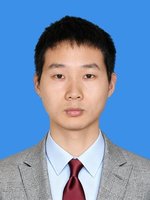
Yaowei Wang
Wuhan University of Science and
Technology, China
Bio: Yaowei Wang(IEEE Member)received the Ph.D. degree in Control Theory and Control Engineering, Zhejiang University of Technology, Hangzhou, China, in 2020. From April 2019 to June 2020, he was a Visiting Ph.D. Student in the Department of Mechanical, Industrial and Aerospace Engineering, Concordia University, Montreal, Canada. From July 2020 to June 2023, He was a research associate in the School of Automation, China University of Geosciences. He is currently an Associate Professor with the School of Artificial Intelligence and Automation, Wuhan University of Science and Technology, Wuhan, China. His research interests include decision optimization, disturbance rejection control and its application, networked control systems and motion control.
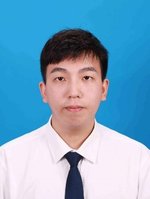
Qi Wu
Zhejiang University of Technology,
China
Bio: Qi Wu received the B.E. degree in electrical engineering and automation from Wenzhou University, Wenzhou, China, in 2016, and the Ph.D. degree in control theory and control engineering from the Zhejiang University of Technology, Hangzhou, China, in 2021. He is currently with the College of Information Engineering, Zhejiang University of Technology. His research interests include networked motion control systems, industrial data analysis, and AI industrial applications.
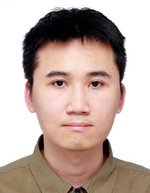
Caoyuan Gu
Zhejiang University of
Technology, China
Bio: Caoyuan Gu received the B.Eng. degree in electrical engineering and automation from China Jiliang University, Hangzhou, China, in 2018 and the Ph.D. degree in control theory and control engineering from the Zhejiang University of Technology, Hangzhou, China, in 2024. He is currently a Postdoctor with the College of Information Engineering, Zhejiang University of Technology. His research interests include disturbance rejection, multi-agent systems, and fault tolerant control.